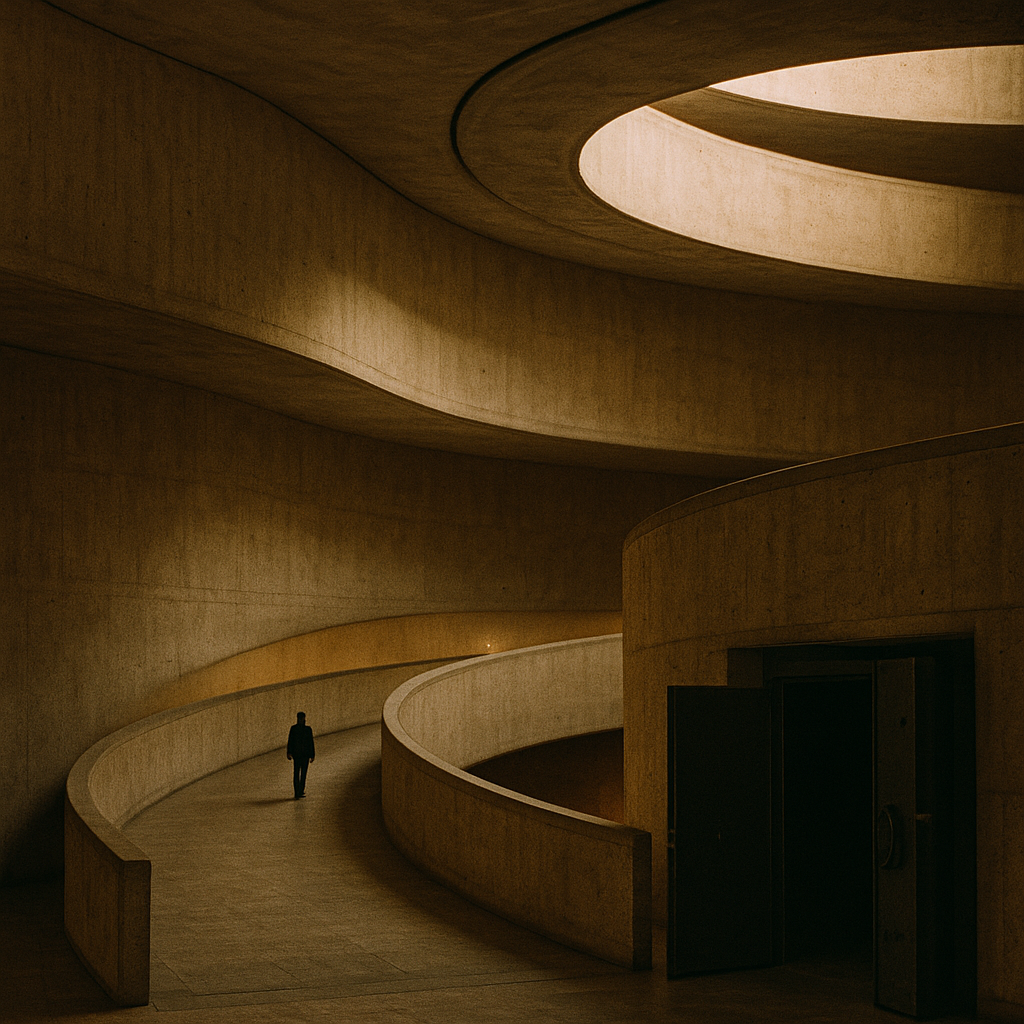
I went to understand where Tehran's artists come from. Half the answer is a museum that has kept a Pollock in its vault for forty years.
To understand the artists, I went to the museum they grew up beside. The Tehran Museum of Contemporary Art opened in 1977 with something astonishing inside: one of the great collections of modern Western art anywhere — Pollock, Picasso, Warhol — much of it then kept, for decades, in the vault.
You walk down its spiralling rotunda and feel the strangeness of it: a city holding masterpieces it could rarely show. Imagine being a young painter here, knowing the Pollock is downstairs in the dark.
“Imagine growing up next door to that, mostly unable to see it. It makes a certain kind of artist.”
That tension — proximity and distance, inheritance and restraint — is in a lot of the work I love here. It pushes artists to make their own canon rather than borrow one.
I don't curate from the museum, but I understand the scene better for it. The contemporary pieces we choose are answers, in a way, to a question the building has been asking for fifty years.