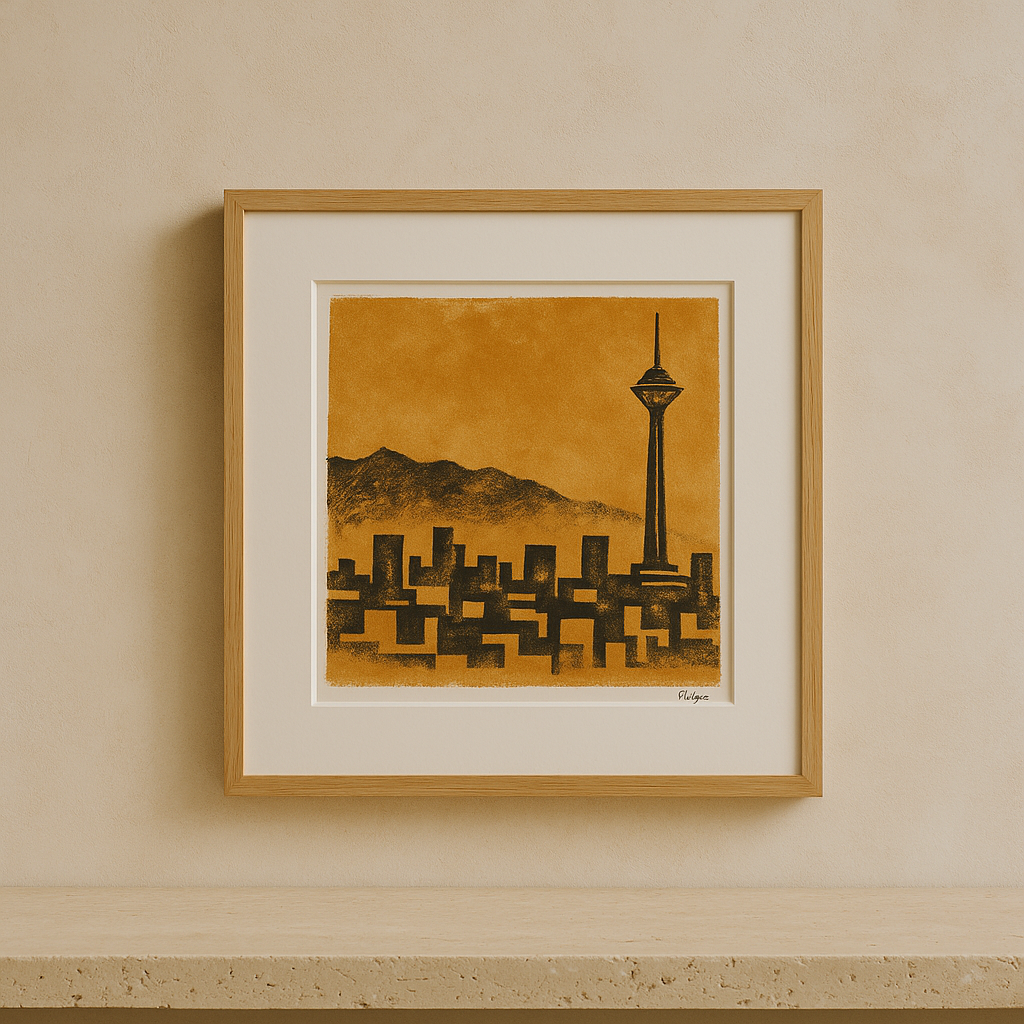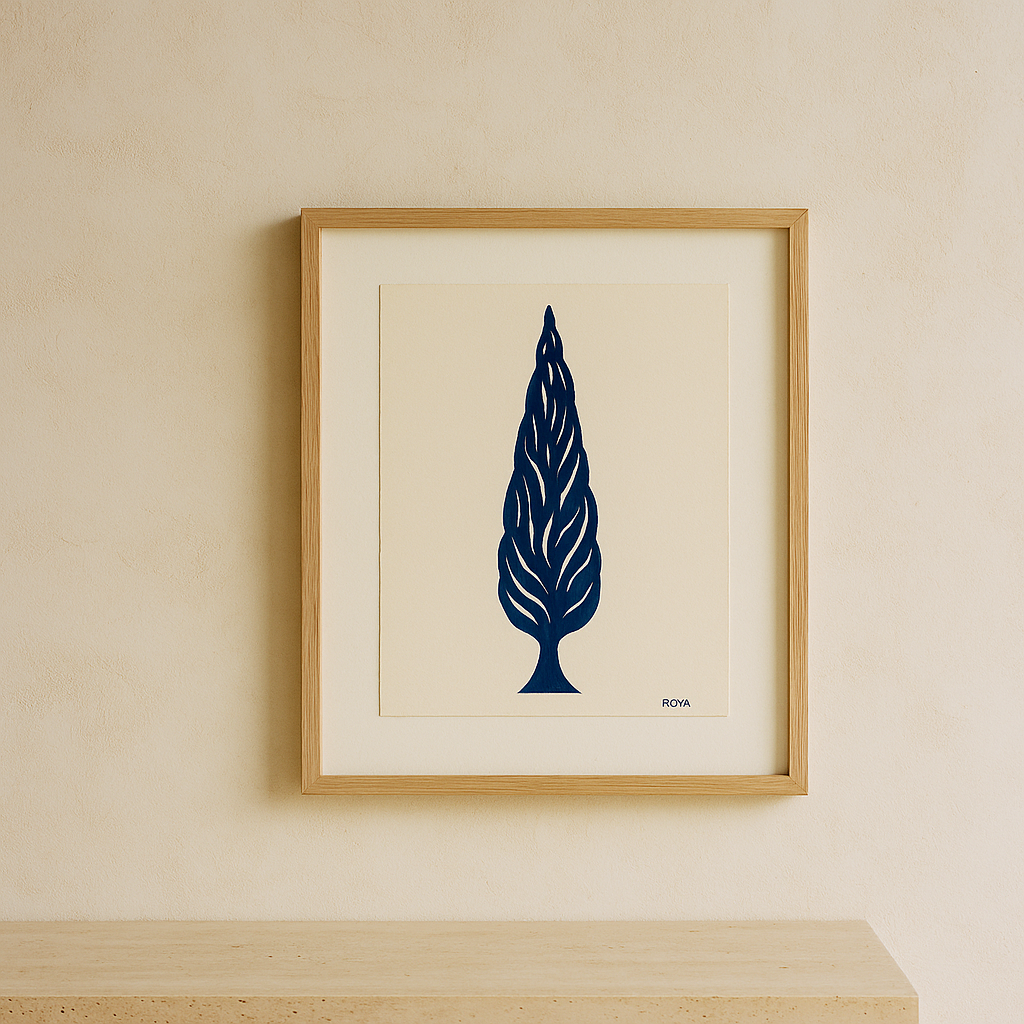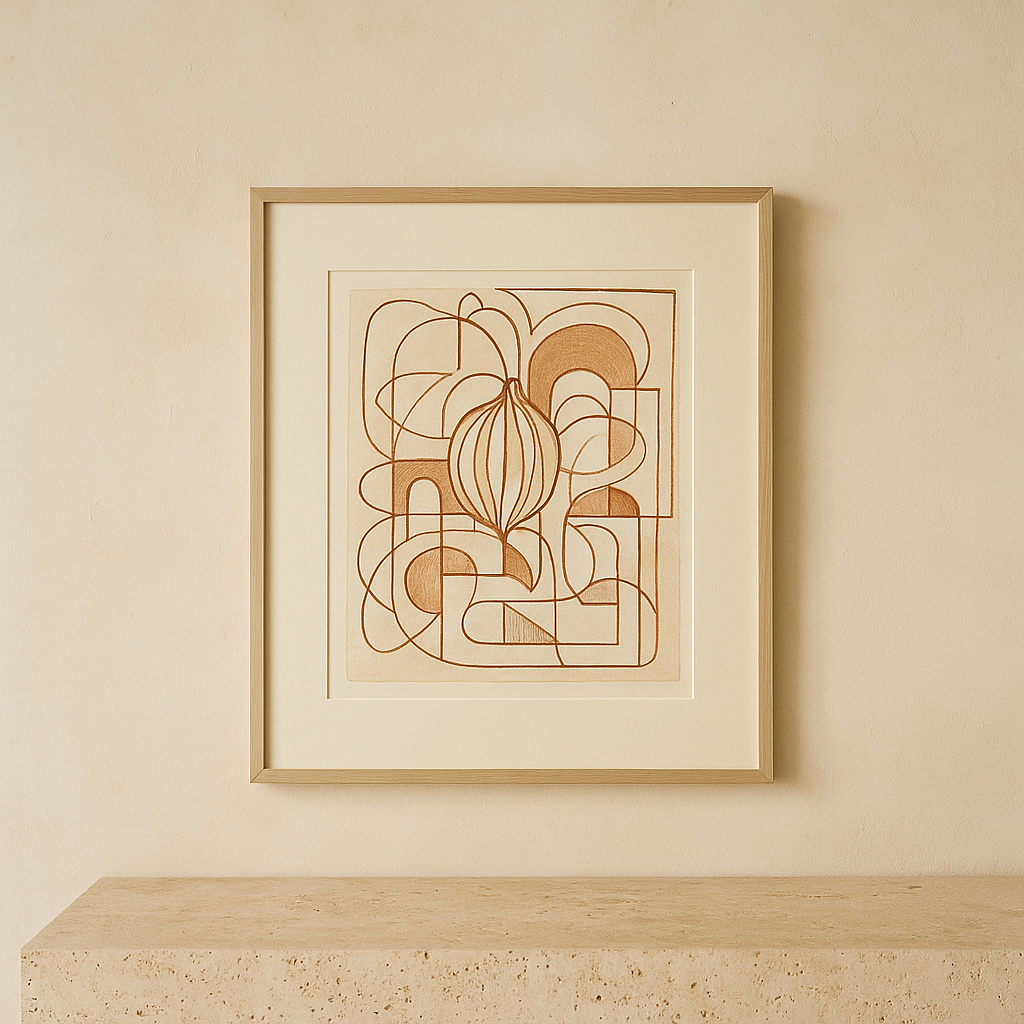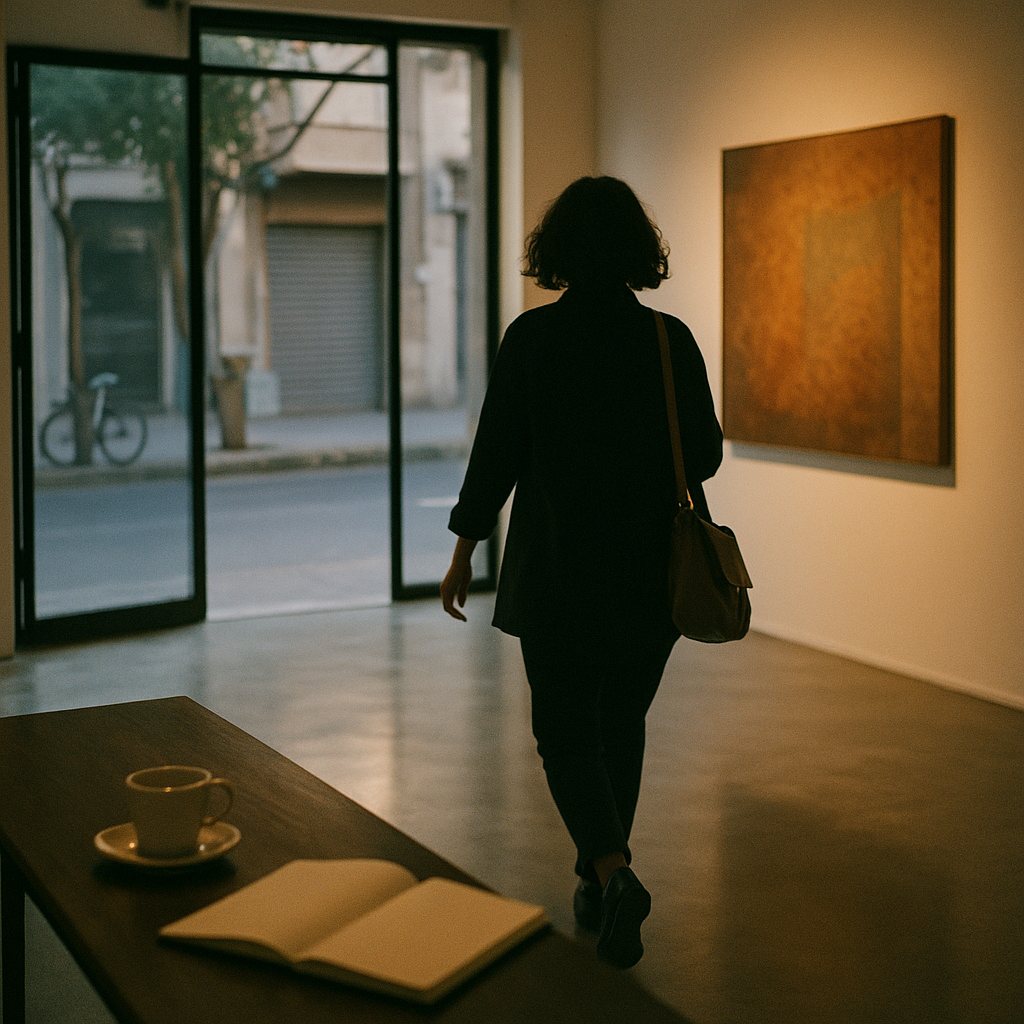
Behind a quiet door off a north-Tehran street: a white room, a crowd, and some of the most urgent art being made anywhere.
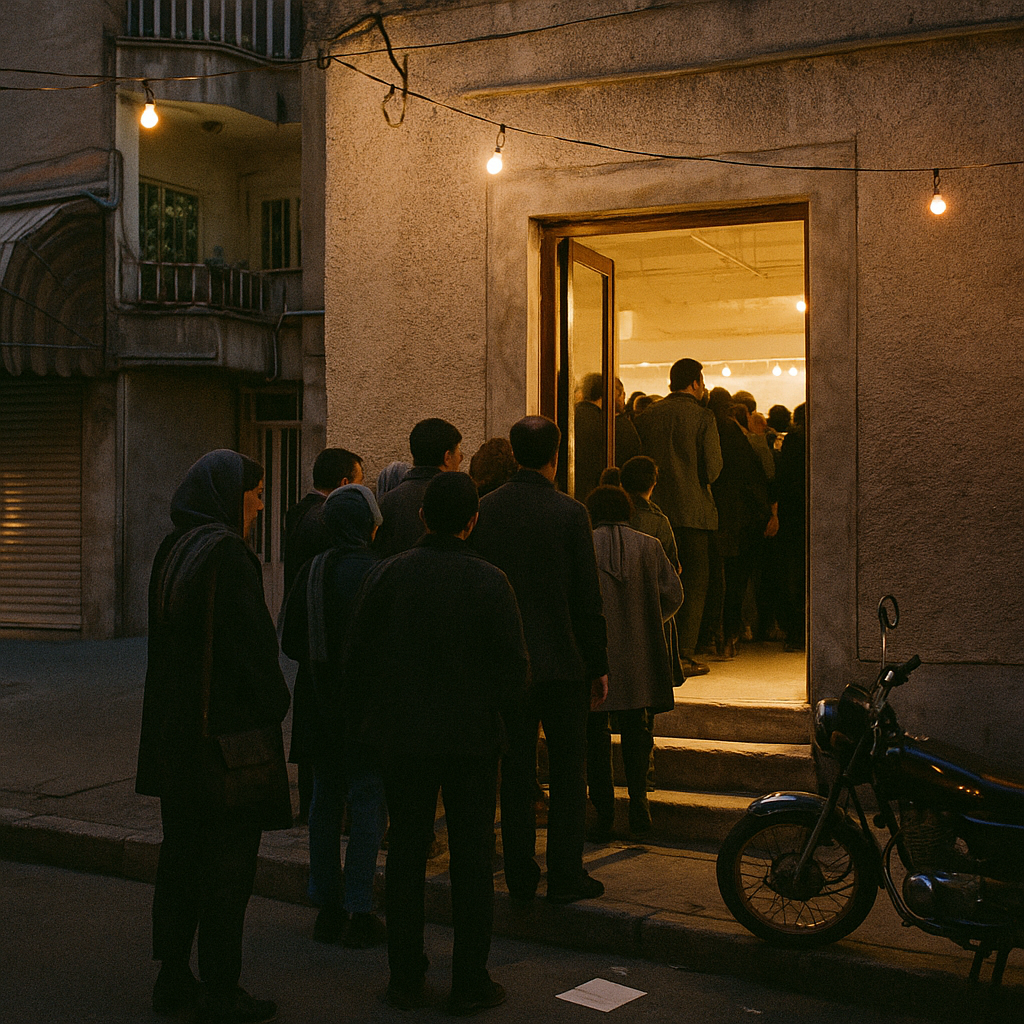
Tehran does not announce its art. You find it behind unmarked doors and up narrow stairs, in galleries tucked between apartment blocks and carpet shops — and then, on opening night, the whole street fills with people spilling onto the pavement.
The scene is dense and young. A city of millions makes a lot of artists, and a generation raised between tradition and the internet is making work that argues with both. Calligraphy bends into abstraction; old miniature techniques get turned on the present; photography looks hard at a place the outside world rarely sees clearly.
“It is some of the most urgent work being made anywhere — it just happens to be made here.”
What strikes a visitor is the seriousness and the warmth at once. Collectors and students stand at the same table; the conversation is real, not performed. There is little market noise to hide behind, so the work has to mean something — and mostly, it does.
We go because this is where the contemporary half of the house comes from. Not folklore, not nostalgia — living artists, working now, who deserve a wall in the West as much as anyone shown in Berlin or New York.