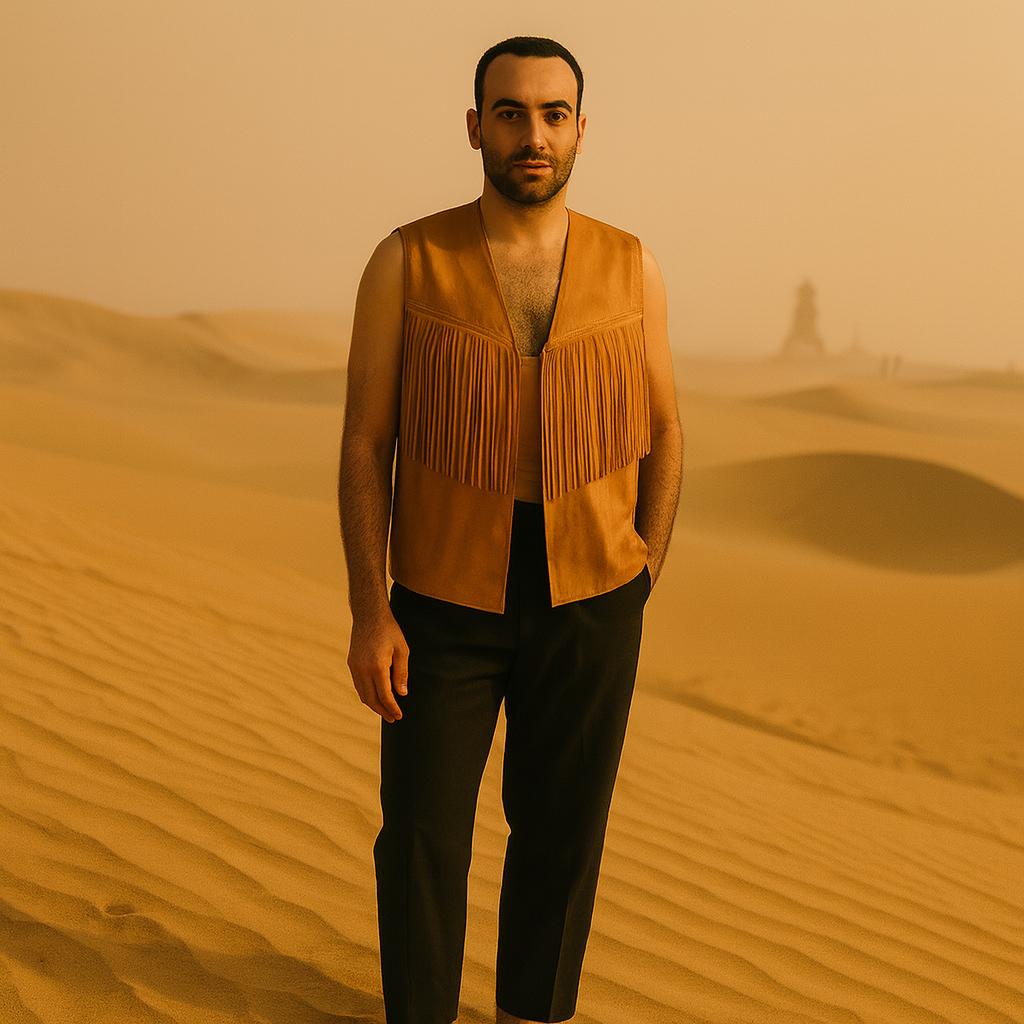
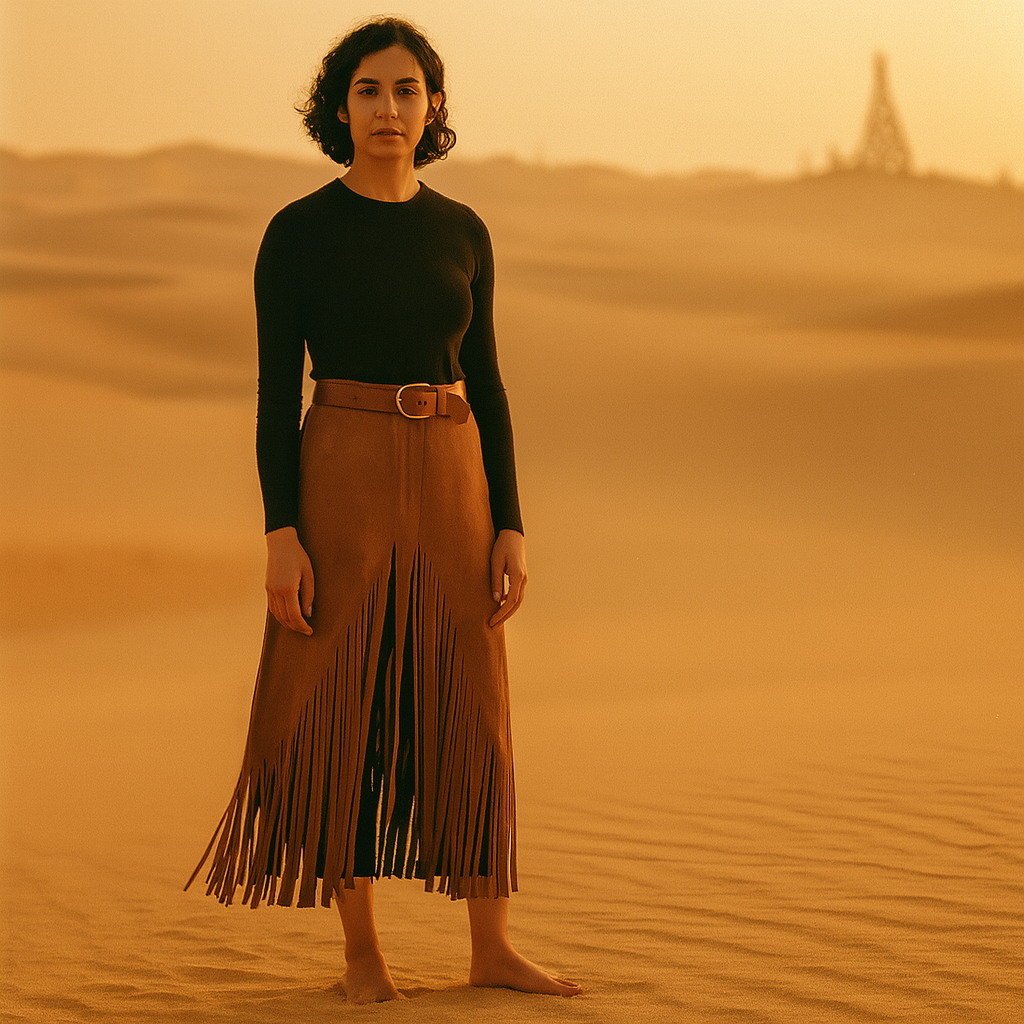
Bahar Eshraghi
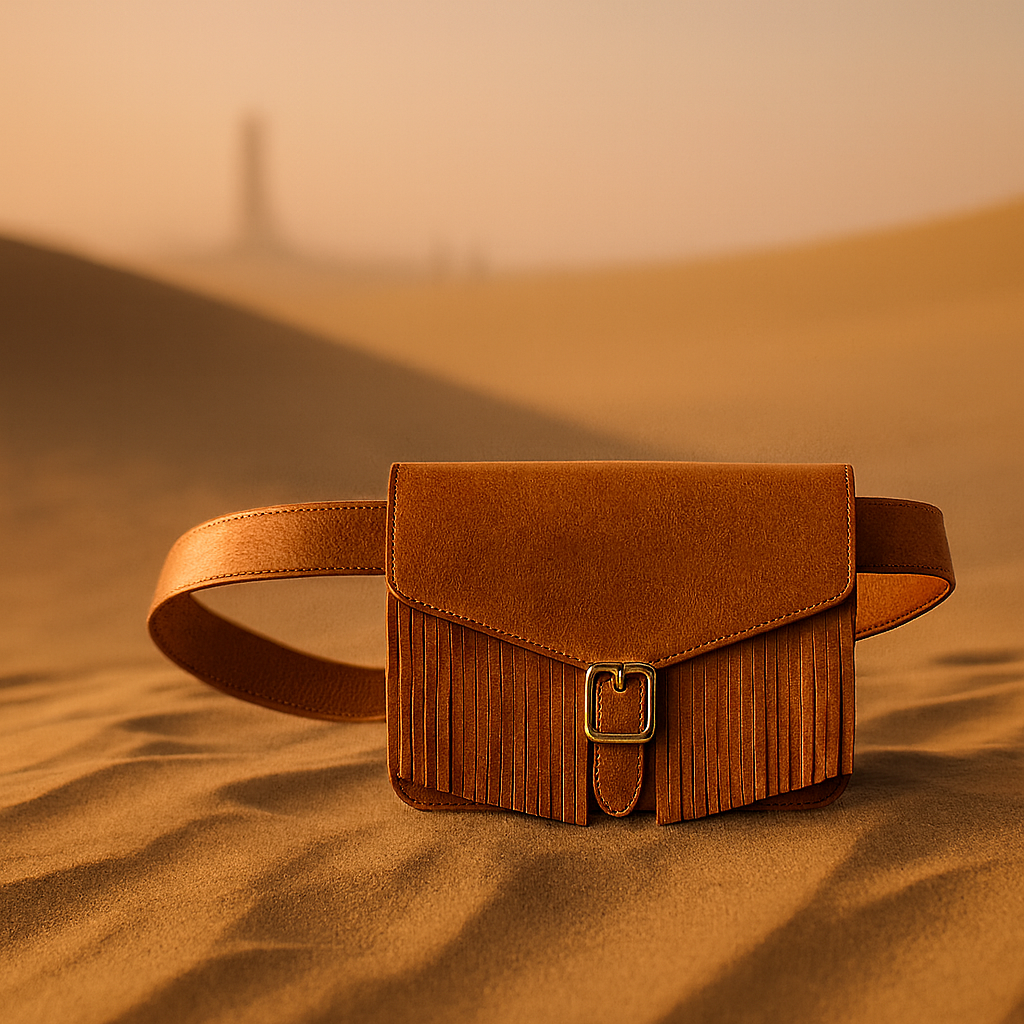
Bahar runs a one-room leather workshop where she does every stage of the work herself, from selecting full-grain hide to the final stitch. She favors vegetable-tanned leather for its smell and the way it darkens and softens with wear rather than cracking, and she cuts each panel by hand against paper patterns refined over years of making the same core shapes. Fringe is the part she is known for: hundreds of even, hand-cut strands per bag, each one trimmed to length after assembly so the edge falls straight. Seams are saddle-stitched with two needles pulling in opposite directions through the same hole — slower than machine sewing, but a method that won't unravel if a single thread breaks. She works alone, at her own bench, and her pieces are reached and paid for through a screened export partner outside Iran.
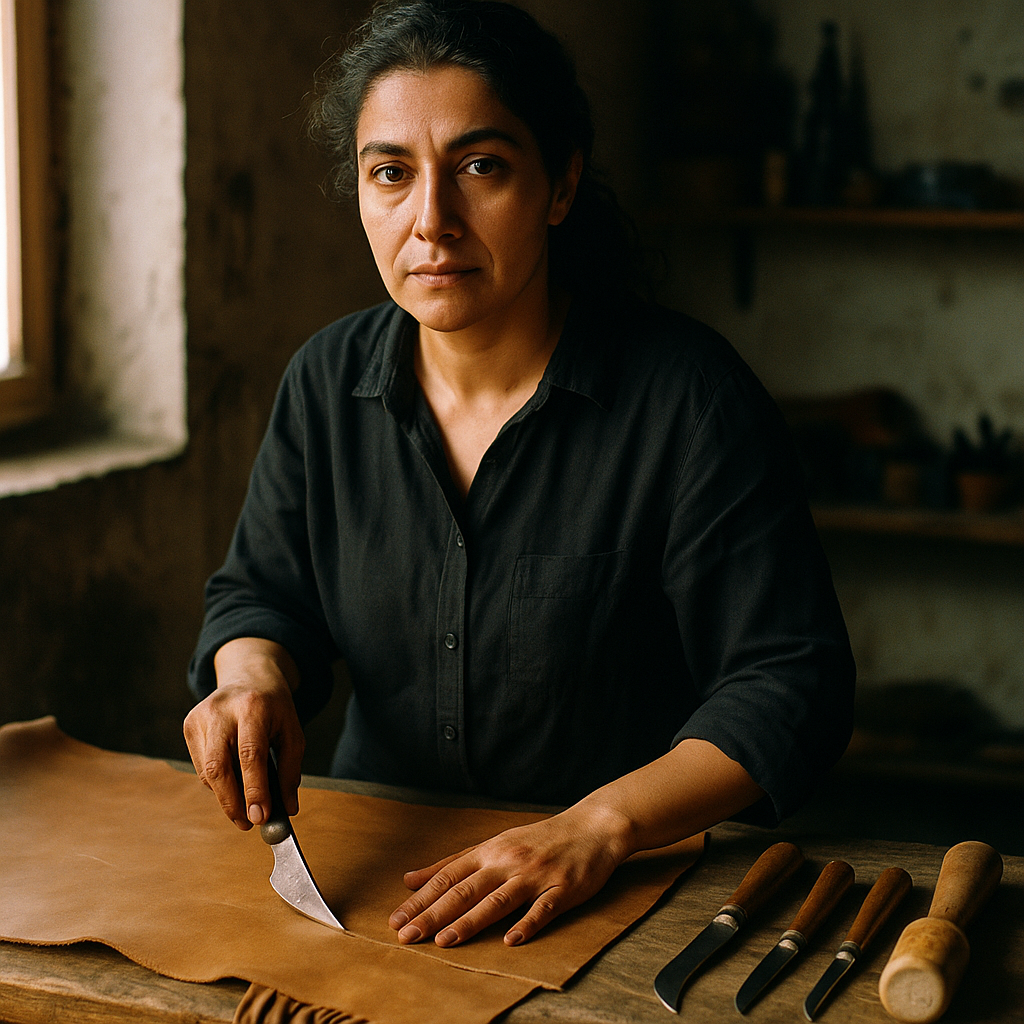
Bahar tans and cuts full-grain hide in her own small workshop, hand-stitching every fringe and seam herself, reached and paid through a screened export partner outside Iran.
Iran (via intermediary)
She wants a seam that will still hold if every other stitch around it fails, so she sews it that way herself.